RSS

Category Archives: Beef

Down Home Cooking: Sloppy Joes and Cornbread

Michelle has been asking me to make Sloppy Joes since before we got back to Charlotte, so tonight is the night. I was trying to come up with a good side dish to go along with the meal, and I tweeted America’s Test Kitchen to see if they had a recommendation. They suggested I make some cornbread to go along with the meal, so that’s what I am going to do. I’ve never made cornbread before, but the recipe looks as easy as the sloppy joes, so we’ll give it a try.

Sloppy Joes

1 tablespoon vegetable oil

1 medium onion, minced

1 garlic clove, minced

1/2 teaspoon chili powder

3/4 pound ground beef

1 teaspoon brown sugar

Salt and pepper

1 cup tomato puree

1/2 cup ketchup

1/4 cup water

Tabasco

Hamburger buns

Heat the oil in a large skillet over medium-high heat until shimmering. Add the onion and cook until lightly browned, about 5 minutes. Add the garlic and chili powder and cook for 1 minute. Add the beef, brown sugar, 1/4 teaspoon of salt, and 1/8 teaspoon of pepper. Reduce the heat to medium and cook, breaking the meat into small pieces, until the meat is no longer pink, about 4 minutes.

Stir in the tomato puree, ketchup and water. Cook until the mixture is slightly thickened, about 5 minutes. Season with Tabasco and salt and pepper to taste. Spoon 1/2 cup of the meat mixture into each hamburger bun.

Trust me, making your own sloppy joe sauce is so much better than using anything out of a can or a spice package. Homemade doesn’t require a lot of ingredients (the only thing I didn’t have in the house is the tomato puree) and it will taste far better than anything you can buy.

Now for the cornbread. As I said, I’ve never made it before, but the recipe from America’s Test Kitchen seems pretty basic and I had all the ingredients on hand, so let’s give it a shot.

Skillet Cornbread

4 teaspoons bacon drippings or vegetable oil

1 cup yellow cornmeal

2 teaspoons sugar

1 teaspoon baking powder

1/2 teaspoon salt

1/4 teaspoon baking soda

1/3 cup rapidly boiling water

3/4 cup buttermilk

1 large egg, lightly beaten

Adjust an oven rack to the lower middle position and heat the oven to 450 degrees. Set a cast-iron skillet with the bacon drippings or oil in the oven while it heats. Measure 1/3 cup of the cornmeal into a medium bowl. Whisk the remaining 2/3 cup of cornmeal, sugar, baking powder, salt and baking soda together in a small bowl and set aside.

Add the boiling water to the 1/3 cup of cornmeal and stir to make a stiff mush. Gradually whisk in the buttermilk until smooth, then whisk in the egg. When the oven is pre-heated and the skillet is very hot, gently fold the dry ingredients into the mush mixture until just combined.

Carefully remove the skillet from the oven. Pour the bacon fat or hot oil from the skillet into the batter and stir to combine. Quickly pour the batter into the skillet. Bake until golden brown, about 20 minutes. Flip the cornbread out of the skillet and onto a wire rack and let cool for 5 minutes before serving.

According to the recipe, baking the cornbread in a greased and pre-heated cast-iron skillet will give the cornbread a brown, crunchy crust, which is what I like. If you don’t have a cast-iron pan, you could use a cake pan (round or square) or a regular skillet, but it may not be as crunchy. Just a quick note on this recipe. I didn’t have buttermilk on hand, but it’s very easy to make your own buttermilk at home. For 1 cup of buttermilk, stir 1 tablespoon of white vinegar or fresh lemon juice into the milk and let it stand for 5 minutes until thickened.

That’s all there is to it. I do have a menu for the rest of this abbreviated week. It is:

Thursday: Apple and Prune Stuffed Pork Loin

Friday: Roast Chicken with Oven-Glazed Carrots and Warm Parsley Sauce

Saturday: Snacks for Dinner (This is a Sean favorite, so you’ll see what it is Saturday)

Sunday: Roast Beef with Au Jus

Some good meals to look forward to this week. The apple and prune stuffed pork is a Michelle favorite, and I need the chicken to make some stock this week, so it works out pretty well. Check back tomorrow to see about the pork loin recipe. Until then, enjoy your evening and enjoy your meal!

 
5 Comments

Posted by on April 11, 2012 in Beef, Breads, Cooking, Dinner


Tags: , ,

A Sunday Marinated London Broil

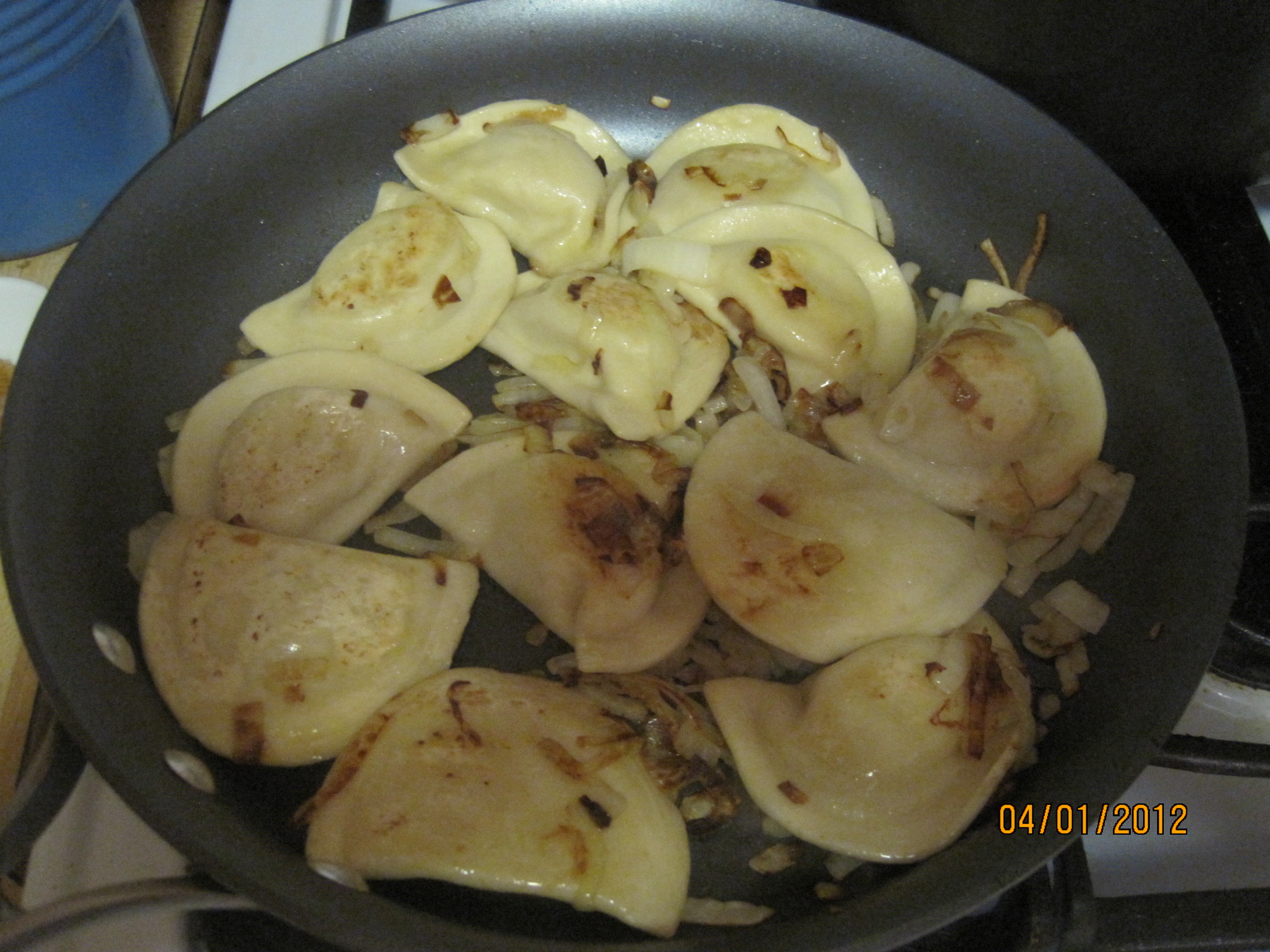
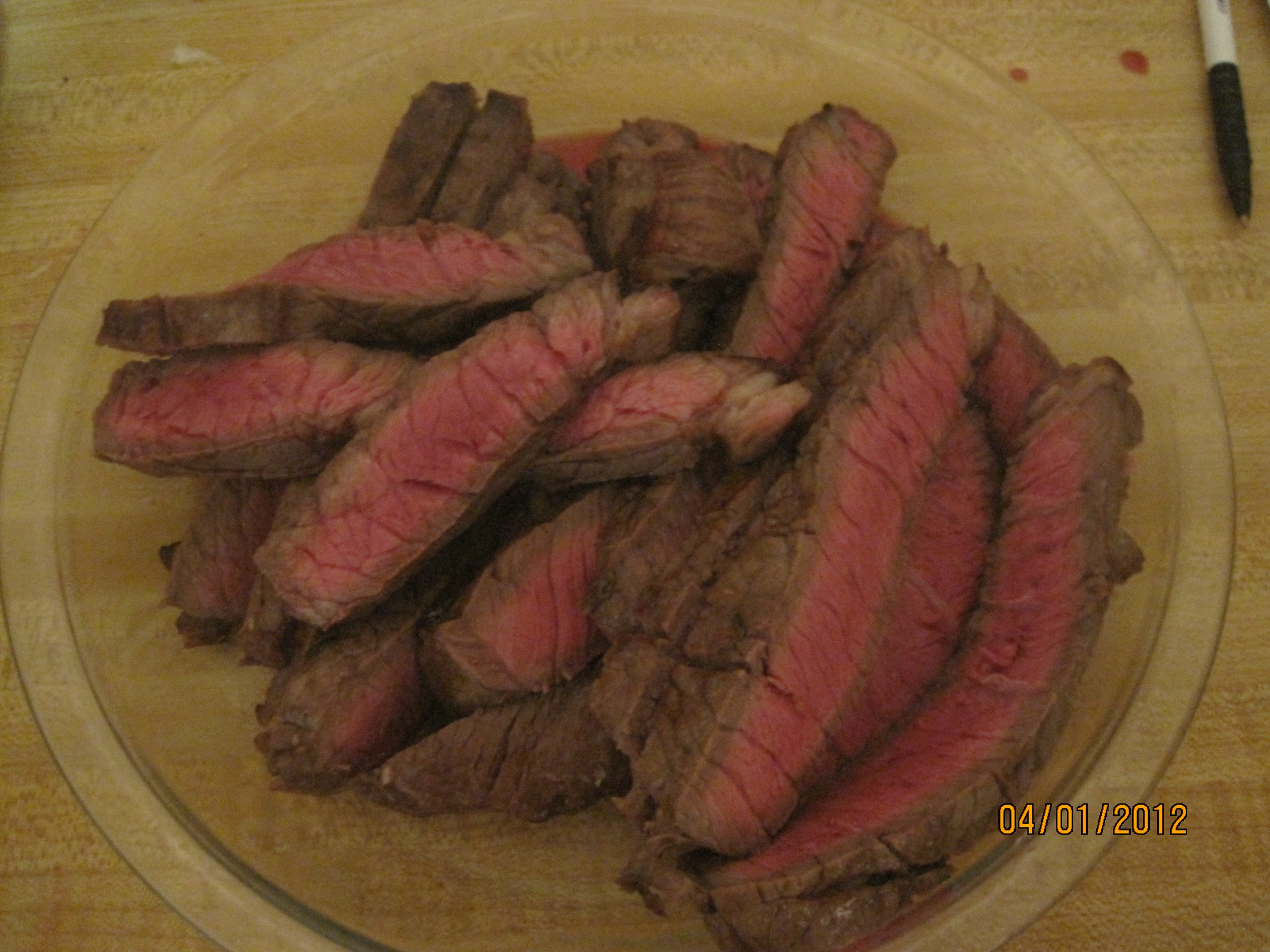
It’s Sunday, when I usually make a more complex meal for the week because I have the time to do it. This week’s been a little crazy between illnesses, Michelle’s work schedule, planning and packing for our trip down to Charlotte, and such, so I am trying to keep things simple for dinner today. I saw a nice London broil in the store yesterday so I decided to make a simple London broil for dinner tonight. I am also going to make some pierogies to go along with it. Michelle and Sean love pierogies and I saw in a blog that I follow, The Ranting Chef, that he was making them in a meal and they were also on sale at the store yesterday, so I bought some to make as well.

London broil is one of those cuts of beef that cries out to be marinated in some way. It takes on the flavors you add nicely, so just about any combination you want of an oil and an acid will work well. I am using a marinade that I often use for London broil. It’s quick, easy, and tastes great.

Marinated London Broil

1/3 cup minced shallots
3 tablespoons soy sauce
1/2 cup olive oil
3 tablespoons fresh thyme
Big dash hot sauce
3 tablespoons freshly squeezed lemon juice
1 1/2 pounds London broil

Mix the shallots, soy sauce, olive oil, thyme, hot sauce and lemon juice together in a glass pie plate, glass bowl or broiling pan. Score the steak, place it in the pan and turn in the marinade. Marinate for at least 2 hours at room temperature or up to 24 hours refrigerated. If refrigerated, turn the steak in the marinade occasionally.

Drain off marinade and put it into a saucepan. Place the steak under the broiler at 1 inch from the heat for 3 to 4 minutes on each side for rare or for 4 to 5 minutes on each side for medium. Leave the broiler door slightly ajar, so the heat stays on and air circulates. Meanwhile, bring the marinade to a boil. Remove the marinade from heat. Carve the meat in thin diagonal slices across the grain. Arrange the slices on a warm platter. Pour the carving juices and the marinade over the meat.

It’s fast and easy and tastes wonderful. The pierogies are just as easy. I bought frozen pierogies, so you can simply follow the directions on the box. I typically boil the pierogies until they float, about 4 or 5 minutes, then remove them from the water and drain them. I then saute them in a skillet with some melted butter and sliced onions until the pierogies are browned and the onions begin to caramelize, about 5 or 6 minutes. You can then add sour cream to them when you serve them if you wish.

The last part of our meal tonight is a staple in our diet, broccoli. I get a little tired of steamed broccoli so tonight I am going to try pan roasting it. Broccoli doesn’t take to well to pan roasting if you don’t watch it carefully, it can easily burn and get too dry. Trying to keep it tender and bright green can be tricky, but if you trim the broccoli to uniform size and cook the stems and the florets at separate times, it seems to work out pretty well. I’ve tried using this recipe from America’s Test Kitchen and it has worked pretty well for me.

Pan-Roasted Broccoli

3 tablespoons water

1/4 teaspoon salt

1/8 teaspoon ground black pepper

2 tablespoons vegetable oil

1 pound broccoli , florets cut into 1 1/2-inch pieces, stems trimmed, peeled, and cut on bias into 1/4-inch-thick slices about 1 1/2 inches long (about 5 cups florets and 3/4 cup stems)

Stir the water, salt, and pepper together in a small bowl until the salt dissolves; set aside. In a large, nonstick skillet with a tight-fitting lid, heat the oil over medium-high heat until just beginning to smoke. Add broccoli stems in an even layer and cook, without stirring, until browned on the bottoms, about 2 minutes. Add the florets to the skillet and toss to combine; cook, without stirring, until the bottoms of the florets just begin to brown, 1 to 2 minutes longer.

Add the water mixture and cover the skillet; cook until the broccoli is bright green but still crisp, about 2 minutes. Uncover and continue to cook until the water has evaporated, the broccoli stems are tender, and the florets are tender-crisp, about 2 minutes more.

A simple meal in very little time with not a lot of effort – just what you need on a busy day. I am just cooking a simple meal of burgers tomorrow night since I didn’t do any food shopping since we are leaving for vacation, but I do plan to do some posting once we get to Charlotte of some ideas and recipes that I like to make. Maybe I’ll do some Easter ideas and some simple party recipes. We’ll see how it goes. Until then, have a great day and enjoy your meal!

 
1 Comment

Posted by on April 1, 2012 in Beef, Cooking, Dinner, Vegetables


Tags: , , , ,

A St. Patrick’s Day Feast

Okay, so here we go with today’s menu. I do tend to go a little bit overboard on St. Patrick’s Day, but that’s okay. We have a lot of recipes to use today so let’s get right into it. I am making two corned beefs today and am going to make each a different way. The first one will be made in the pressure cooker and done in 45 minutes, while the second will be slow cooked in a low temperature oven for 4-5 hours.

Corned Beef  and Cabbage in the Pressure Cooker

1 (4 to 5 pound) corned beef brisket, rinsed

4 cups water

1 head of cabbage, cut into 4 wedges

4 carrots, peeled and chopped

Place the corned beef in a pressure cooker and cover with 4 cups of water (or more if needed). Allow the pressure cooker to come up to pressure, and then cook at full pressure for 25 to 30 minutes. Bring the pressure down; after the pressure has come down, open and add the cabbage and carrots. Cover and return to full pressure and cook for an additional 15 minutes, or until the corned beef is fork tender. Remove the meat from the pressure cooker and allow it to rest for 5 to 10 minutes. Remove the vegetables and transfer to a serving platter. Slice the corned beef across the grain and serve.

I always make corned beef in the pressure cooker since it allows me to cook it in under an hour. This way I can cook one whenever I feel like it instead of just one day a year, or to make one to use for corned beef hash (tomorrow’s recipe). The next method is a little closer to traditional, although I personally have never liked just cooking corned beef in a pot on the stove. The meat comes out salty and dry and with not much flavor to it (that little flavor packet they give you does nothing to add flavor) and the vegetables, when cooked with it are usually very mushy. This method in the oven works better and tastes better, and it allows you to cook potatoes, cabbage and carrots in stages in the same pot while the meat rests after the fat has been strained from the cooking liquid.

Corned Beef and Cabbage

1 (4 to 5 pound) corned beef brisket, rinsed, fat trimmed to 1/4 inch thick

4 cups chicken broth

4 cups water

8 carrots, peeled and chopped

2 celery ribs, chopped

1 onion, peeled and quartered

3 bay leaves

1 tablespoon whole black peppercorns

1 tablespoon minced fresh thyme

1 teaspoon whole allspice

3 tablespoons butter

1 1/2 pounds small red potatoes

1 head green cabbage, cut into 8 wedges

Pepper

Adjust an oven rack to the middle position and heat the oven to 300 degrees. Combine the beef, broth, water, 4 chopped carrots, celery, onion, bay leaves, peppercorns, thyme and allspice in a Dutch oven. Cover and bake until a fork slips easily in and out of the meat, about 4 1/2 to 5 hours.

Transfer the meat to a baking dish. Strain the cooking liquid through a strainer into a large bowl, discard the solids, and skim the fat from the liquid. Pour 1 cup of the cooking liquid over the meat. Cover the baking dish tightly with foil and let it rest for 30 minutes. Meanwhile, return the remaining cooking liquid to the Dutch oven, add the butter, and bring to a simmer over medium-high heat. Add the potatoes and simmer until they begin to soften, about 10 minutes. Add the 4 remaining chopped carrots and the cabbage, cover, and cook until tender, about 10 to 15 minutes. Transfer the vegetables to a serving platter and season with pepper to taste. Transfer the beef to a carving board and slice. Serve with the vegetables.

Two quick points about this recipe: use a flat-cut corned beef, not a point-cut; a flat cut is more uniform in shape, cooks more evenly and isn’t as tough a cut as a point-cut. Second, when you cut the cabbage into wedges, leave the core intact. This will keep the cabbage from falling apart while it cooks.

Another side dish for corned beef that incorporates cabbage and potatoes is the traditional dish of Colcannon. it’s an old Irish peasant dish that literally comes from the Gaelic word for white-headed cabbage. In an old Irish custom, the cook would bury charms or coins in the dish, foretelling good luck or wealth, probably in a way to get the children to eat their vegetables. I’ll skip the burying of the coins and charms and just cook the dish myself.

Colcannon

2 1/2 pounds russet potatoes, peeled and quartered

Salt and freshly ground pepper, to taste

8 tablespoons (1 stick) butter

3/4 cup milk

4 bacon slices, cut into a 1/2-inch dice

4 shallots, thinly sliced

1 large leek, white and light green portions, halved lengthwise, rinsed well and thinly sliced

1 bunch curly kale, stemmed and coarsely chopped

1 small head napa cabbage, cored and coarsely chopped

1/8 teaspoon of freshly grated nutmeg

Put the potatoes in a large pot, add water to cover the potatoes by 2 inches and generously salt the water. Bring to a boil over medium-high heat, reduce the heat to medium and cook until the potatoes are tender when pierced with a knife, about 15 minutes. Drain well in a colander.

Meanwhile, in a small saucepan over low heat, combine the butter and milk and heat until the butter melts and the mixture is hot, 8 to 10 minutes.

Set a potato ricer over a large bowl and press the potatoes through in batches. Fold in the milk mixture in two additions. Season with salt and pepper. Cover the bowl with aluminum foil and set over a large saucepan of barely simmering water to keep warm.

Heat a heavy pot or Dutch oven over medium heat until hot. Add the bacon and cook, stirring occasionally, until browned and crisp, about 5 minutes. Using a slotted spoon, transfer the bacon to a paper towel-lined plate. Set aside.

Pour off all but 3 tablespoons of the fat from the pot. Return the pot to medium heat, add the shallots and leek and cook, stirring occasionally, until softened, about 5 minutes. Add the kale and toss just until wilted but still bright green, about 3 minutes. Add the cabbage and toss until tender-crisp, about 8 minutes. Sprinkle with the mace and the bacon, and season with salt and pepper. Stir the potatoes into the cabbage mixture and serve warm.

I always serve corned beef with some mustard, and I found this recipe for Guinness mustard at Bon Appetit’s website. It sounded really good, so I am giving it a try.

Guinness Mustard

1/2 cup coarse-grained Dijon mustard

2 tablespoons regular Dijon mustard

2 tablespoons Guinness stout or other stout or porter

1 tablespoon minced shallot

1 teaspoon golden brown sugar

Whisk all ingredients in small bowl to blend. Cover and refrigerate at least 2 hours. Can be made 2 days ahead. Keep refrigerated.

Now, on to some dessert. I don’t make dessert often, but this recipe for Grasshopper Pie sounded perfect for St. Patrick’s Day. There’s lots of mint in this one, so I think it will be a good one.

Grasshopper Pie

16 Oreo Mint n’ Creme cookies (with filling), broken into rough pieces

3 tablespoons butter, melted and cooled

3 large egg yolks

1 envelope unflavored gelatin

1/2 cup sugar

2 cups heavy cream

Pinch table salt

1/4 cup green creme de menthe

1/4 cup white creme de cacao

For the crust, adjust an oven rack to the middle position and heat the oven to 350 degrees. Grind the cookies in a food processor to fine crumbs. Transfer to a bowl, drizzle with butter, and toss well. Press the crumbs evenly into the bottom and sides of a 9-inch pie plate and refrigerate the crust until firm, about 20 minutes. Bake the crust until set, about 8 to 10 minutes. Cool completely on a wire rack.

For the filling, beat the egg yolks in a medium bowl. Combine the gelatin, sugar, 1/2 cup of cream, and salt in a medium saucepan and let sit until the gelatin softens, about 5 minutes. Cook over medium heat until the gelatin dissolves and the mixture is very hot but not boiling, about 2 minutes. Whisking vigorously, slowly ass the gelatin mixture to the egg yolks. Return the mixture to the saucepan and cook, stirring constantly, until slightly thickened, about 2 minutes. Remove from heat and add the creme de menthe and creme de cacao. Pour into a clean bowl and refrigerate, stirring occasionally, until wobbly but not set, about 20 minutes.

Beat the remaining 1 1/2 cups of cream with an electric mixer to stiff peaks. Whisk 1 cup whipped cream into the gelatin mixture until completely incorporated. Using a rubber spatula, fold the gelatin mixture into the remaining whipped cream until no streaks of white remain. Scrape the mixture into the cooled pie shell, smooth the top, and refrigerate until firm, at least 6 hours and preferable overnight. Serve, topped with chocolate curls.

Okay, we have had corned beef and cabbage, side dishes, and dessert. Now how about some beverages? There’s two that I really like any time, not just St. Patrick’s Day. I make my own version of Irish Coffee and I think it tastes pretty good, so we’ll go with that first.

Irish Coffee

1 tablespoon light brown sugar

1 shot Kahlua

1 shot Jameson’s Irish Whiskey

8 ounces hot coffee

Whipped cream

1/2 teaspoon green creme de menthe (optional)

Fill an Irish coffee glass or coffee mug with hot water to warm the mug. Empty the water, then place sugar, Kahlua and Jameson’s in the glass. Pour coffee into the glass and gently stir. Top with whipped cream and creme de menthe, if desired.

Traditional Irish coffee doesn’t use the brown sugar, Kahlua or the creme de menthe. I like the flavor the brown sugar adds over white sugar and the Kahlua adds a nice toasted coffee flavor to the mix. The creme de menthe is really for show more than anything else.

Another favorite, of course, is the Black and Tan. There’s really no recipe here; you can use any stout and ale you like. I choose Guinness and Harp or Guinness and Bass Ale all the time, but take what tastes best to you. Just pour in the ale and float the stout on top, and you’re done.

Last, but not least, you need a drink for the kids (and some adults too) and what’s better than a Shamrock Shake? Well’ a homemade one is much better than the sweet one you’ll find at McDonald’s.

Homemade Shamrock Shake

1 pint mint chocolate chip ice cream (you can use vanilla if you want)

1 cup milk

1/8 teaspoon mint extract (a little goes a long way, don’t use a lot)

3-6 drops green food coloring (same with the food coloring, don’t use too much)

Mix all the ingredients in a blender until smooth.

Other than having some Junior Mint cookies along with dessert (thank you Girl Scouts!) I think you’re probably all set. I hope everyone enjoys their day, no matter what they are doing, and plays safely. Enjoy your day and enjoy your meal!

 
5 Comments

Posted by on March 17, 2012 in Beef, Cooking, Dessert, Dinner, Potatoes


Tags: , , , , , , , , , ,

Slow Cooking Short Ribs

Tonight’s dinner is all about short ribs. Short ribs are all about the meat and the sauce, and this recipe gives a great deep flavor for both and most of the work is done in the slow cooker.

Red Wine-Braised Short Ribs

5 pounds bone-in shirt ribs, meat and bones separated

Salt and pepper

 2 tablespoons vegetable oil

2 onions,chopped medium

1 carrot, peeled and chopped medium

1 celery rib, chopped medium

2 tablespoons tomato paste

1 tablespoon minced fresh thyme, or 1 teaspoon dried

3 tablespoons all-purpose flour

2 cups dry red wine

2 tablespoons balsamic vinegar

2 cups chicken broth

2 bay leaves

2 tablespoons minced fresh parsley

Separate the meat from the bones by inserting a knife between the rib and meat, staying as close to the bone as possible. Saw the meat off the bone and set aside. Arrange the beef bones in a dish and microwave (in batches, if your microwave is small) until well browned, 10 to 15 minutes; transfer the bones to the slow cooker.

Dry the short ribs meat with paper towels and season with salt and pepper. Heat 1 tablespoon of oil in a large skillet over medium-high heat until just smoking. Brown half of the short ribs well on all sides, 7 to minutes; transfer the meat to the slow cooker. Repeat with the remaining tablespoon of oil and the remaining short ribs; when done, transfer them to the slow cooker.

Add the onions, carrot, celery, tomato paste and thyme to the fat in the skillet and cook over medium-high heat until the onions are softened and lightly browned, about 8 to 10 minutes. Stir in the flour and cook for 1 minute. Slowly whisk in the wine and the vinegar, scraping up any browned bits and smoothing out any lumps. Bring to a simmer and cook until reduced to 1 cup, about 5 minutes; transfer to the slow cooker.

Stir the broth and the bay leaves into the slow cooker. Cover and cook until the beef is tender, 9 to 11 hours on low or 5 to 7 hours on high. Transfer the short ribs to a serving platter and tent loosely with aluminum foil. Let the braising liquid settle for 5 minutes, then remove the fat from the surface using a large spoon. Strain the braising liquid, discarding the solids, and season with salt and pepper to taste. Stir in the parsley. Spoon 1 cup of sauce over the short ribs and serve with the remaining sauce on the side.

Microwaving the bones before cooking may seem a little odd, but it actually does two things for you: first, it renders out a lot of unwanted fat (short ribs can be very greasy) and second, it gives the bones a roasted flavor which in turn deepens the sauce during the long cooking time. It’s a little work at first with the microwave and the skillet, but I think you’ll be happy with the results if you put the work into it.

I am serving the short ribs with mashed potatoes. Mashed potatoes go perfectly with this meal and  placing a couple of the ribs with the sauce directly over the mashed potatoes is delicious. I have posted my recipe for mashed potatoes before, so if you would like to check it out, feel free to click here to get it. I am also keeping the vegetable simple with just some steamed broccoli to round out the meal.

That’s all there is to this dinner. Mondays seem to cry out for a nice, slow cooker meal. So many of us are ready to crash by the time the day ends on Monday, so it would be nice to come home to meal that is just about done. You can even peel the potatoes ahead of time and just leave them in a pot of water on the stove so you can just turn it on and go when you get home.

Tomorrow night’s meal is a simple Spaghetti and Meatballs, which I have made before. I may do a slight variation on it this time, so check back and see how the recipe looks. I’ll also be writing about a couple of items I am looking to purchase to make cooking a little easier and fun, so check back and see those as well. If you have any questions, comments, suggestions or recipes you may be looking for, please feel free to leave a comment and I’ll get back to you. I hope everyone is enjoying the warm weather today. Spring is right around the corner, and I’ll be cleaning up the grill soon so we can start using that for cooking too! Enjoy your day and enjoy your meal!

 
4 Comments

Posted by on March 12, 2012 in Beef, Cooking, Dinner, Potatoes, Slow Cooker Meals


Tags: , , , , ,

There’s Nothing Like a Burger…

Sean wanted hamburgers tonight, so I decided I would make them for dinner. I also made oven fries again, which were delicious. They were nice and crunchy on the outside and creamy in the center, like fries should be made. I also made some oven-fried onion rings. I hadn’t made these before, but I have to say they came out nicely. I have posted the recipes I use for hamburgers and oven fries before, but if you would like to check them out, you can simply click here and go to that day’s blog. I will post the onion ring recipe I used.

Oven-Fried Onion Rings

1/2 cup all-purpose flour

1 large egg, at room temperature

1/2 cup buttermilk, at room temperature

1/4 teaspoon cayenne pepper

Salt and pepper

30 saltines

4 cups kettle-cooked potato chips

2 large yellow onions cut into 24 large rings

6 tablespoons vegetable oil

Adjust oven racks to lower-middle and upper-middle positions and heat oven to 450 degrees. Place 1/4 cup of flour in a shallow baking dish. Beat egg and buttermilk together in a medium bowl. Whisk the remaining 1/4 cup of flour, cayenne, 1/2 teaspoon of salt, and 1/4 teaspoon of pepper into the buttermilk mixture. Pulse the saltines and the chips together in a food processor until they are finely ground and place in a separate shallow baking dish.

Pull apart the rings of onion in each round, discarding any that are less than 2 inches in diameter. Working one at a time, dredge each onion ring in flour, shaking off the excess. Dip the onion ring in the buttermilk mixture, allowing excess to drip back into the bowl, then drop the ring into the crumb coating, turning the ring to coat evenly. Transfer the ring to a large plate and repeat the process with the remaining onion rings.

Pour 3 tablespoons of oil onto each of the two rimmed baking sheets. Place in the oven and heat until just smoking, about 8 minutes. Carefully tilt the heated baking sheets to coat them evenly with oil, then arrange the onion rings on the sheets. Bake, flipping the onion rings over and switching and rotating the positions of the baking sheets halfway through baking, until they are golden brown on both sides, about 15 minutes. Transfer the onion rings to plates lined with paper towels to drain briefly. Serve immediately.

You can bread the onion rings ahead of time refrigerate them for up to an hour. Let them sit at room temperature for 30 minutes before baking; if you bake them straight from the fridge, the onions will not soften properly and will remain crunchy.

These onion rings turn out very crisp and crunchy, almost like they were fried. Using the kettle chips helps produce a golden crust that makes the crust seem deep-fried. Adding the saltines add some saltiness to the mix and helps to absorb the excess grease from the potato chips. Definitely give them a try if you get the chance; we loved having them with the burgers tonight.

Tomorrow night is a meat-free meal night; well, not completely meat-free but pretty close. I am making Fettuccine Alfredo for Michelle and Sean for dinner, but since I am not too keen on pasta or cheese, I am having a crab stuffed rainbow trout for myself. I’ll be posting both recipes  so you can check them out tomorrow night. Until then, enjoy your meal and enjoy your evening!

 
1 Comment

Posted by on March 7, 2012 in Beef, Cooking, Dinner, Potatoes, Vegetables


Tags: , , , , ,

Slow Cooking Some Stew

Tonight’s dinner has been cooking all day and it smells terrific. Beef stew is one of those meals that you can make all day in the slow cooker or all day on the stove, and it makes the whole house smell great. You don’t need a lot of ingredients to make it and you can always add other vegetables to it if you want.

Beef Stew with Bacon

4 slices thick-cut bacon, chopped

3 tablespoons flour

1 teaspoon salt, plus more, to taste

1/2 teaspoon freshly ground pepper, plus more, to taste

2 pounds boneless beef chuck, trimmed of excess fat and cut into chunks (I am actually using a london broil instead this time)

3/4 cup fresh mushrooms, halved if large

1/2 pound baby carrots

4 to 5 small red potatoes, scrubbed and quartered

1/2 pound frozen pearl onions (you can use 1 large yellow onion, chopped, instead)

3 garlic cloves, minced

1 cup dry red wine

1 cup beef broth

2 tablespoons tomato paste

In a large fry pan over medium heat, cook the bacon, stirring occasionally, until crisp, about 5 to 7 minutes. Transfer the bacon to paper towels to drain. Pour off the drippings into a small heatproof bowl, leaving about 1 tablespoon drippings in the pan. Set the pan, reserved drippings and bacon aside.

In a sealable plastic bag, combine the flour, the 1 teaspoon of salt and the 1/2 teaspoon of pepper. Add the beef chunks and shake to coat evenly with the flour mixture. Return the fry pan to medium-high heat. When the drippings are hot, add half the beef chunks and cook, turning once, until well browned, about 5 minutes on each side. Transfer the beef to the slow cooker. Repeat with the remaining beef chunks, adding the reserved drippings if needed. Scatter the mushrooms, carrots, potatoes, onions, and garlic on top.

Return the pan to medium-high heat and add the wine, broth and tomato paste. Mix well, bring to a boil and deglaze the pan, stirring to scrape up any browned bits on the pan bottom. Pour the  contents of the pan over the vegetables and beef. Cover and cook on the high-heat setting for 4 to 5 hours or the low-heat setting for 8 to 9 hours. The beef should be very tender. Stir in the reserved bacon. Cook, uncovered, on the high-heat setting for 10 minutes more to thicken the sauce slightly. Season with salt and pepper and serve.

Of course, the stew is great served with some crunchy bread, rolls or biscuits. If you would like to see a simple biscuit recipe, just check here for a previous blog entry that included the biscuits. You can always freeze any leftovers to save to be re-heated on a later day or use it for lunches during the week.

This was a pretty simple slow cooker meal, which is ideal for a Monday night. Tomorrow night, I’ll be making Bacon Chicken Ranch Quesadillas and we’ll be having the leftover black beans and rice and mango pineapple salsa, both from Sunday’s dinner. If you have any questions or there are any recipes that you might like to see or if you have some ideas for the blog, please feel free to leave a comment. Until tomorrow, have a great evening and enjoy your meal!


Tags: , , , , , ,

A Lovely Leg of Lamb

I didn’t get to do a blog entry yesterday. We had company early and all day, so I just never had time to do it, so today I will probably do two posts to get caught up. Catching up is more for me because it keeps me writing, but it also keeps everything on schedule for my meal plan as well. Anyway, yesterday was Roast Leg of Lamb, Baked Potatoes, Cauliflower and Turnips (and it was quite tasty by the way). None is hard to make, just maybe a little time-consuming and there is some prep work to be done, but it’s well worth it.

Roast Leg of Lamb

5-6 pound leg of lamb (semi-boneless or boneless is fine, although boneless is quite expensive)

1/2 cup Dijon mustard

2 tablespoons soy sauce

1 clove of garlic, mashed

1 teaspoon ground rosemary

1/4 teaspoon ground ginger

2 tablespoons olive oil

Preheat the oven to 350 degrees. In a small bowl, blend mustard, soy sauce, garlic, rosemary and ginger until mixed thoroughly. Whisk in the olive oil by droplets to make the mixture have a mayonnaise-like consistency. With a rubber spatula, paint the mixture on the lamb to coat it thoroughly. Set the lamb on a rack in a roasting pan. Cover and refrigerate for 2-3 hours to allow to marinade.

Roast lamb in 350 degree oven until an oven-safe thermometer inserted in the meat reads 150 degrees for medium-rare (about 1-1 1/4 hours), or 160 degrees for well done (about 1 1/4 to 1 1/2 hours).

Making the marinade and marinading the lamb takes longer than the actual roasting, but it does add a nice flavor and crust to the meat.

For the side dishes, I made baked potatoes, which we have done before. If you would like to see my method for making them, you can check here for the recipe. Both the cauliflower and the turnips are quite simple to make but I will put both recipes up here so you can see what I did with them.

Steamed Cauliflower

1 head (about 2 pounds) cauliflower. cored and florets cut into 1-inch pieces

Place a steaming rack or basket into a large pot or Dutch oven and add water until it touches the bottom of the rack. Bring the water to a boil over high heat. Lay the cauliflower in the steaming rack, cover, and steam until tender, about 7 to 9 minutes. Check the pot periodically to make sure the water has not boiled dry, adding more water as needed.

The turnips are just as simple:

Pureed Turnips

1 1/2 pounds turnip, peeled and cut into 1-inch cubes

Salt

2 tablespoons olive oil or butter

Ground black pepper

Place the cut turnips in a large pot with water to cover and add a large pinch of salt. Bring to a boil and cook until the turnips are tender, about 10 to 15 minutes. You want them fully tender but not mushy. Drain the turnips well, reserving some of the cooking liquid. Cool slightly and put them in a blender or food processor with as much of the cooking liquid as you need to get the machine going. (You can also mash the turnips with a large fork or potato masher, adding the cooking liquid as needed.) Add the olive oil or butter and stir, then taste and season with more salt if necessary and sprinkle with pepper.

You could also add up to 1/2 cup of cream, sour cream, half-and-half or milk to make the mixture rich and creamier if you like.

That was our dinner yesterday, and there were some leftovers, which makes things a perfect lead-in for tonight’s dinner, which will be Shepherd’s Pie. We’ll be using the leftover lamb and turnips as part of the recipe, which I’ll be posting later on today as the start of our one pot meals week. Until then, enjoy your afternoon and I’ll be back later!


Leave a comment

Posted by on February 20, 2012 in Beef, Cooking, Dinner, Potatoes, Vegetables


Tags: , , , , , ,

Dinner’s Gone to Pot (Roast)

Today’s dinner is another one of my all-time favorites (and it’s already cooking by the way, since it does take some time). I love pot roast; it was always one of my favorite meals growing up. The best thing about pot roast is that shouldn’t even have to slice it. Just leaning a knife or fork up against it should make it fall apart (we always called it “the meat that falls apart” when we were growing up). The nice thing about pot roast is that it’s nearly impossible to overcook it. if you don’t think it looks right to you, leave it in a little longer. I’ve tried a few different recipes over the years, but this one from an old America’s Test Kitchen cookbook seems to give me the best results. I have cooked it in the slow cooker before and it comes out just fine also, but I like the gravy that comes out of this one better.

Simple Pot Roast

1 boneless chuck roast (about 3 1/2 pounds)

2 tablespoons vegetable oil

1 medium onion, chopped medium

1 small carrot, chopped medium

1 small rib celery, chopped medium

2 garlic cloves, minced

2 teaspoons sugar

1 cup chicken broth

1 cup beef broth

1 sprig fresh thyme

1-2 cups water

1/4 cup dry red wine

Adjust an oven rack to the middle position and heat the oven to 300 degrees. Thoroughly pat the roast dry with paper towels; sprinkle generously with salt and pepper.

Heat the oil in a large heavy-bottomed Dutch Oven over medium-high heat until shimmering but not smoking. Brown the roast thoroughly on all sides, reducing the heat if the fat begins to smoke, 8 to 10 minutes. Transfer the roast to a large plate; set aside. Reduce the heat to medium; add the onion, carrot and celery to the pot and cook, stirring occasionally, until beginning to brown, 6 to 8 minutes. Add the garlic and the sugar; cook until fragrant, about 30 seconds. Add the chicken and beef broths and thyme, scraping the bottom of the pan with a wooden spoon to loosen the browned bits. Return the roast and any accumulated juices to the pot; add enough water to come halfway up the sides of the roast. Place a large piece of foil over the pot and cover tightly with a lid; bring the liquid to a simmer over medium heat, then transfer the pot to the oven. Cook turning the roast every 30 minutes, until fully tender and a meat fork or sharp knife slips in and out of the meat, 3 1/2 to 4 hours.

Transfer the roast to a carving board; tent with foil to keep warm. Allow the liquid in the pot to settle about 5 minutes, then use a wide spoon to skim the fat off the surface; discard the thyme sprig. Boil over high heat until reduced to about 1 1/2 cups, about 8 minutes. Add the red wine and reduce again to 1 1/2 cups, about 2 minutes. Season to taste with salt and pepper.

Using a chef’s knife or carving knife, cut the meat into 1/2-inch-thick slices, or pull apart into large pieces; transfer the meat to a warmed serving platter and pour about 1/2 cup of sauce over the meat. Serve, passing the remaining sauce separately.

Yum, yum. There are variations of this recipe, of course. One adds root vegetables such as carrots, small red potatoes and parsnips after the roast is done. Just strain the liquid after you remove the roast, pour the liquid back in the pot, return the roast and the new vegetables to the pot and continue to until the vegetables are almost tender, about 20 to 30 minutes. Then remove the roast, add the wine and boil the vegetables over high heat until fully tender, about another 10 minutes. Remove the vegetables with a slotted spoon, and you are good to go.

I like to serve pot roast with mashed potatoes instead of putting potatoes in the pot with the roast. I love the mashed potatoes with the gravy produced by this roast. I have made mashed potatoes a few times on this meal plan, but if you would like the recipe, you can just click here to see it from an earlier posting.

I was going to make green beans to go with the pot roast, but when I got Adams Farms yesterday, Brussels sprouts were on sale, so I am making those instead. I love Brussels sprouts, but I admit they are an acquired taste. A lot of people don’t care for them, but we eat them regularly in our house. One of my favorite ways to cook them is to make them in a skillet with some bacon and shallots, which is what I am going to do tonight.

Skillet-Braised Brussels Sprouts with Bacon and Shallots

4 ounces bacon (4 slices), chopped fine

2 shallots, sliced thin

1 pound Brussels sprouts, stem ends trimmed, discolored leaves removed, and halved through the stem

1/2 cup water

Salt

1 tablespoon butter

1 tablespoon red wine vinegar

Pepper

Cook the bacon and shallots together in a large skillet over medium heat until the bacon is crisp and the shallots are browned, about 10 minutes. Transfer the mixture to a paper towel-lined plate to drain.

Add the Brussels sprouts, water, and 1/2 teaspoon salt to the skillet and increase the heat to medium-high. Cover and simmer until the Brussels sprouts are bright green, about 9 minutes. Uncover the pan and cook until the liquid has evaporated and the sprouts are tender, about 5 minutes longer.

Off the heat, stir in the bacon mixture, butter and vinegar. Season with salt and pepper to taste before serving.

You really need to halve the sprouts when you are braising them like this. If you leave them whole, they are just too dense and won’t cook well all the way through, making them mushy outside and nearly raw inside. Cooking them this way also eliminates the aroma sprouts can give off that seems to turn a lot of people off to them.

So that’s today’s meal. If they are any leftovers, you can make a great open-faced sandwich with the pot roast and gravy with some mashed potatoes on the side. We have tomorrow marked as a leftovers night for dinner, so we may have that ourselves. We have the meal plan for next week just about finalized, so I will be writing about that tomorrow. I will say that all the meals for next week are going to be one pot meals and two of them are specifically slow cooker meals. Check it out tomorrow to see what you have to look forward to for dinners. If you have any questions, comments or suggestions, please feel free to pass them along here. Thanks again for checking the blog out. I am pretty happy with the way things are going with it so far, so we’ll keep going! Enjoy your day and enjoy your meal tonight!

 
Leave a comment

Posted by on February 17, 2012 in Beef, Cooking, Dinner, Potatoes, Vegetables


Tags: , , ,

Repas de Saint-Valentin (Okay, A Valentine’s Day Meal)

Happy Valentine’s Day to everyone out there. There’s nothing more romantic than a quiet dinner with your sweetie, whether it’s out at a restaurant or at home.This dinner menu, which I got from Williams-Sonoma, is French-themed and requires a little more work than what we have cooked lately, but not much, and the rewards will be worth it. I have also included a dessert today, which I don’t normally do, but heck, it’s a special day, so why not?

The first course is a Riesling onion Soup with Herbed Croutons. It’s a variation on the classic French Onion Soup. It takes a little bit (about an hour in total) to prepare and cook, but it’s a nice touch to start off the meal and you could always make the soup a day ahead of time and re-heat it when you are ready to serve it for your meal.

Riesling Onion Soup with Herbed Croutons

3 tablespoons butter

4 large yellow onions, thinly sliced

2 leeks, including pale green tops, sliced

1 garlic clove, chopped

2 tablespoons fresh tarragon leaves, chopped

3 tablespoons all-purpose flour

2 cups Riesling (use a dry Riesling, not “late harvest”) 6 cups chicken stock (I am using homemade, find my recipe here)

Salt and pepper, to taste

For the Herbed Croutons:

1/2 baguette, thinly sliced

2 tablespoons olive oil

2 tablespoons butter, melted

2 tablespoons mixed fresh herbs, such as tarragon, parsley, thyme or rosemary, in any combination 1/2 pound of Italian fontina cheese, cut into small cubes

In a large, wide saucepan over medium heat, melt the butter. Add the onions, leeks, garlic and tarragon and cook, stirring often, until the onions are soft and golden, about 15 minutes. Sprinkle in the flour and cook, stirring constantly, for 3 minutes more. Pour in the wine, bring to a simmer and cook until reduced by half, about 10 minutes. Pour in the stock and return to a simmer, reduce heat to low and cook, uncovered, until reduced slightly, about 45 minutes.

To make the herbed croutons, preheat an oven to 300 degrees. Arrange the baguette slices in a single layer on a rimmed baking sheet. In a small bowl, stir together the olive oil, butter and herbs. Lightly coat each bread slice on both sides with the oil mixture. Toast the bread in the oven, turning occasionally, until crisp and golden brown, 15 to 20 minutes. Remove from the oven and set aside. (The croutons can be made up to 24 hours in advance and stored, tightly covered, at room temperature.)

Preheat a broiler. Arrange individual ovenproof bowls on a baking sheet and ladle soup into the bowls. Top each serving with 2 or 3 croutons and an equal amount of the cheese. Place the baking sheet under the broiler 7 inches from the heat source and broil until the cheese melts, about 1 minute. Remove from the broiler and serve immediately.

This recipe is for a service of 6, so you may want to cut it 2/3 if you are only making it for 2.

For the entrée, I am making Steaks with Shallot-Red Wine Sauce. I have made this before and posted the recipe in an earlier blog, so if you want to check it out, just click here and you can see the recipe for it. It’s very tasty and the only difference this time is that I am using bone-in ribeyes instead of boneless, but you can whatever cut of steak you like best.

I am making two sides with tonight’s meal. The first is Sautéed Spinach with Pine Nuts. I am making a slight variation of this, as pine nuts are quite expensive and I won’t use them very often. A good, cheaper alternative is slivered almonds, so I am going with those instead.

Spinach Sautéed with Pine Nuts

1/4 cup pine nuts (I am using slivered almonds instead)

2 tablespoons olive oil

1 yellow onion, finely chopped

1 garlic clove, chopped

2 pounds spinach leaves, tough stems removed and leaves well rinsed (this sounds like a lot, but it really isn’t. Spinach cooks down significantly when you saute it)

Salt and pepper to taste

If desired, toast the pine nuts (or almonds) by heating them gently in a dry, small, heavy fry pan over medium heat, tossing them every so often as they become golden and fragrant, 2 to 4 minutes. Watch the nuts closely as they can burn very easily. When toasted, immediately pour them onto a plate.

In a fry pan over medium heat, warm the olive oil. Add the onion and saute lightly until golden, 5 to 8 minutes. Add the garlic and saute for 1 minute more. Remove the pan from the heat and set aside.

Put the spinach with just the rinsing water clinging to the leaves in a saucepan over medium-high heat, cover, and cook until the spinach is bright green and wilted, 1 to 2 minutes. Remove from the heat and drain well in a colander, pressing the spinach with the back of a spoon to remove excess moisture. When the spinach is cool enough to handle, chop it coarsely.

Add the spinach and nuts to the onion and garlic in the fry pan and return to medium heat. Stir until the spinach and onion are heated through, 1 to 2 minutes. Season with salt and pepper. Serve hot or at room temperature.

To go with the steak and spinach, I opted for Twice-Baked Potatoes tonight. You could easily go with roasted potatoes or mashed potatoes, but the twice-baked sounded like something different to try and you can use a variety of toppings, if you like.

Twice-Baked Potatoes

russet potatoes (7 to 8 ounces each), scrubbed, dried, and rubbed lightly with vegetable oil

2 ounces sharp cheddar cheese , shredded (about 1 cup)

1/4 cup sour cream

1/4 cup milk

1 tablespoons butter , room temperature

2 medium scallions , white and green parts sliced thin

1/4 teaspoon salt

 Ground black pepper

 Put an oven rack to upper middle position and heat oven to 400 degrees. Bake the potatoes on foil-lined baking sheet until skin is crisp and deep brown and skewer easily pierces the flesh, about 1 hour. Setting the baking sheet aside, transfer the potatoes to a wire rack and let sit until cool enough to handle, about 10 minutes. Using an oven mitt or folded kitchen towel to handle the hot potatoes, cut each potato in half so that the blunt sides will rest on work surface. Using a small dinner spoon, scoop the flesh from each half into medium bowl, leaving a 1/8-inch to 1/4-inch thickness of flesh in each shell. Arrange the shells on a lined sheet and return to the oven until dry and slightly crisped, about 10 minutes. Meanwhile, mash the potato flesh with fork until smooth. Stir in remaining ingredients, including pepper to taste, until well combined.

Remove the shells from the oven and increase the oven setting to broil. Holding the shells steady on a pan with an oven mitt or towel-protected hand, spoon the mixture into crisped shells, mounding slightly at the center, and return to the oven. Broil until spotty brown and crisp on top, 10 to 15 minutes. Allow to cool for 10 minutes. Serve warm.

You can always use a different cheese instead of cheddar to change things up for yourself and the shells should come nice and crispy, not soggy, in this recipe.

Finally, on to dessert. I am not a dessert person and very rarely make them myself, but tonight I will give it a shot and this recipe is pretty easy to use and great for the chocolate lovers. You need to use a double boiler for this recipe, but if you don’t have one(and I don’t) you can use a makeshift one. Choose a saucepan and a heatproof bowl(preferably glass) that rests securely in the top. Fill the saucepan with water to a depth of about 1 to 2 inches. Once the bowl is placed atop the pan, the water must not touch it. Remember that boiling water bubbles up, so check the water level before setting the bowl in place. Bring the water to a boil, set the bowl in place, and reduce the heat so the water simmers gently. If the water bubbles up and is hitting the bowl, you’ll get condensation in the bowl, your chocolate will end up seizing, and you’ll end up having to start over.

Warm Molten Chocolate Cakes

8 ounces bittersweet chocolate, finely chopped

4 tablespoons (1/2 stick) unsalted butter, cut into pieces

1 teaspoon vanilla extract

Pinch of salt

4 egg yolks

6 tablespoons sugar

2 tablespoons Dutch process cocoa powder, sifted

1 teaspoon finely grated orange zest (optional)

3 egg whites, at room temperature

Preheat an oven to 400°F. Lightly butter six 3/4-cup ramekins and dust with cocoa powder. Set the ramekins on a small baking sheet.

In the top pan of a double boiler, combine the chocolate and butter. Set the pan over, but not touching, barely simmering water in the bottom pan and melt the chocolate and butter, then whisk until the mixture is glossy and smooth. Remove from the heat and stir in the vanilla and salt. Set aside to cool slightly.

In a large bowl, using an electric mixer, beat the egg yolks, 3 tablespoons of the sugar, the cocoa powder and the orange zest on medium-high speed until thick. Spoon the chocolate mixture into the yolk mixture and beat until well blended. The mixture will be very thick.

In a bowl, using clean beaters, beat the egg whites on medium-high speed until they are very foamy and thick. Sprinkle in the remaining 3 tablespoons of sugar and increase the speed to high. Continue beating until firm, glossy peaks form. Spoon half of the beaten whites onto the chocolate mixture and whisk in until just blended. Add the remaining whites and stir gently until just blended. Spoon into the prepared ramekins, dividing evenly.

Bake the cakes until they are puffed and the tops are cracked, about 13 minutes. The inside of the cracks will look very wet. Remove from the oven and serve immediately in the ramekins. Or run the tip of a small knife around the inside of each ramekin to loosen the cake, then invert the cakes onto individual plates.


You could serve these with a little dusting of powdered sugar and some raspberries or strawberries and maybe a dollop of whipped cream or creme anglaise (which I’m not adventurous enough to make, but some might be), or even a little vanilla ice cream with some shaved chocolate.

Okay, that’s it, my Valentine’s Day meal. It’s not as hard as it may seem, trust me. It’s just a matter of organizing your time and space so everything is done on time. You could even have everything set up to make the dessert and make it after you finish eating the dinner if you want. Enjoy your meal and your time with your special someone, have a nice glass of wine and snuggle by the fireplace. Tomorrow’s meal is back to simplicity with Cream of Cauliflower Soup. It’s our meat-free meal of the week so feel free to check it out. If you have any questions, comments, would like to let us know what you are making or eating tonight, please do! Have a great day everyone!


Tags: , , , , , , , , , , , , , , ,

Making Some Homemade Staples (No, Not the Metal Kind…)

Since we’re going to be heading out to the Winter Carnival in Saranac Lake today, I won’t be cooking any dinner. I thought today might be a good day to show a couple of simple recipes to make some of the homemade ingredients I use on a regular basis, like breadcrumbs and broth. None of these recipes are hard to make, and while the broth can take a little time to accomplish, it is absolutely worth it to have around and tastes so much better than store-bought. Making your own chicken broth can be accomplished in a couple of ways. One method uses a left over chicken carcass from a whole roasted chicken. This method can take hours and I do this when I know I have the time to let it sit on the stove. The second method I use is much quicker and tastes just as good. For this method I use some drumsticks for making the stock.We’ll just cover the quick one today.

Chicken Broth

1 tablespoon vegetable oil

4 pounds chicken legs

1 onion, quartered

1 carrot, cut into chunks

1 rib celery, cut into chunks

 2 quarts water

2 teaspoons salt

2 bay leaves

Heat the oil in a large Dutch oven over medium-high heat until smoking. Brown half of the chicken on both sides, about 10 minutes total. Transfer to a large bowl. Repeat with the remaining chicken and transfer to the bowl. Pour off the fat from the pot. Return all the chicken to the pot and stir in the onion, carrot and celery. Reduce the heat to low, cover, and cook until the chicken releases its juices, about 20 minutes. Stir in the water, salt and bay leaves. Bring to a simmer, cover and cook until the broth is rich and flavorful, about 20 minutes. Strain the broth into a large container, and let stand for 10 minutes before skimming the fat. Remove the meat from the bones and reserve separately.

Chicken legs are relatively inexpensive and great for using to make some stock if you don’t have the chicken carcass. They also give the broth, a nice, rich, meaty flavor and you can save the meat off the bones to use for soup if you like. This broth can be easily frozen and will keep in the freezer for up to 3 months.

The next stock to make would be some shrimp stock. This is probably the easiest stock to make out of something you would normally throw away without thinking twice. You can use this as a good substitute when recipes call for a fish stock.

Shrimp Stock

Shells from 1 to 2 pounds shrimp

1/2 onion, sliced

1/2 carrot, sliced

1/2 celery stalk, sliced

Combine all the ingredients and add 4 1/2 cups of water. Bring to a boil, then turn the heat to very low, cover and cook for 15 minutes.. Cool slightly, then strain, pressing on the shells to extract as much juice as possible. Use immediately or refrigerate for up to 3 days or freeze for up to a few weeks.

After chicken and shrimp, you can always make some vegetable broth. Again, it’s a very simple process using what you already have in the house and doesn’t take long to complete.

Vegetable Stock

4 large carrots, sliced

2 large onions, chopped

1 large potato, sliced

2 celery stalks, chopped

5 or 6 cloves of garlic

10 to medium button mushrooms, trimmed and sliced (optional)

2 medium tomatoes, chopped

Freshly ground black pepper

Combine all ingredients and add 14 cups of water and some pepper. Bring to a boil and adjust the heat so the mixture simmers steadily but gently and cook for about 30 minutes, or until the vegetables are very tender (Longer is better if you have the time). Cool slightly, then strain, pressing on the vegetables to extract as much juice as possible. Use immediately or refrigerate for up to 5 days or freeze for up to 3 months.

Finally, I do occasionally make my own beef stock. If you have any meat bones to use, or scraps or inexpensive cuts of meat, you can do this at home. I find store-bought beef broth is okay, as long as you get the lower sodium, but if you can make it, then why not?

Beef Stock

3 to 4 pounds meaty beef bones, like shank, shin, tail or short ribs

2 medium onions, chopped

2 medium carrots, chopped

2 celery stalks, chopped

1 bay leaf

1 tablespoon salt, plus more to taste

3 cloves

10 peppercorns

Rinse the bones well under cold running water. then transfer to a large stockpot and add the remaining ingredients. Add about 16 cups of water, enough to cover by a couple of inches. Bring just about to a boil, then partially cover and adjust the heat so the mixture sends up a few bubbles at a time. Cook, skimming off any foam that accumulates at the top, until the meat falls from the bones and the bones separate from one another, 2 to 3 hours. Cool slightly, then strain, pressing on the vegetables and meat to extract as much juice as possible. Taste and add salt if necessary. Use immediately or refrigerate (skim off any hardened fat from the surface) and use within 4 to 5 days or freeze up to 3 months.

Other than stock, the other staple I make at home is breadcrumbs. I use breadcrumbs a lot for coating, binding or as a crunchy topping. They are really simple to make and the only work on your part is pulling out the food processor. I prefer to use white bread for breadcrumbs; it seems to have the best texture.

Homemade Breadcrumbs

Tear pieces of sandwich bread into quarters and pulse in a food processor to coarse crumbs, about 8 pulses. One slice of bread should yield about 1 cup.

If you want dried breadcrumbs, you can either just use some stale bread in the food processor, or take the fresh breadcrumbs you made, sprinkle them on a baking sheet and bake in a 300 degree oven until dry, about 15 to 30 minutes.

Dried breadcrumbs can be stored in a zip-lock bag or container at room temperature for about 1 month, while fresh can be stored for about 1 week. You could freeze either one for about 3 months, just allow about 30 minutes of thawing at room temperature before you use them.

So that’s it for the staples for today. They are quick ways to get some fresh, homemade ingredients that you’ll find yourself using quite often. Tomorrow I’ll be posting my Chicken Corn Chowder recipe that we brought for Winter Carnival, and good thing since it’s about 10 degrees up here! See you tomorrow!

 
4 Comments

Posted by on February 10, 2012 in Beef, Cooking, Pantry, Poultry, Soups & Stews, Vegetables


Tags: , , , , ,

 
National Day Calendar

Fun, unusual and forgotten designations on our calendar.

Jennifer Probst

a little bit naughty a little bit nice

Laissez Faire

Letting Life Lead

simple cooking recipes

a blog to share with you the best