RSS

Category Archives: Dinner

One More Easy Turkey Recipe Before Thanksgiving – Simple Roast Turkey

Okay, there is still plenty of time left if you haven’t really decided want you want to do with your turkey on Thanksgiving. It’s only Monday, so you still have time to do some kind of brining if that is what you want to do. I made another turkey this past weekend to try out a dry brine method that I saw from The New York Times and Melissa Clark recently because I wanted to see if it made any difference in the bird. If it seems like I have made a lot of  turkey the last few weeks, well I have. I wanted to try some things out to give people some options and see how things work and since I wasn’t cooking Thanksgiving dinner this year myself, it seemed like a good idea. I even have 1 turkey left to cook, but my family is getting kind of tired of eating turkey at this point so I might hold on to that one until we get closer to Christmas. In the meantime, here is a very simple dry brine recipe that adds some great flavor to the turkey.

Simple Roast Turkey

1 turkey, 10 to 12 pounds

Coarse kosher salt

1 tablespoon black pepper

1 lemon, zested and quartered

1 bunch fresh thyme or rosemary

1 bunch fresh sage

12 garlic cloves, smashed and peeled

1 bottle hard cider (12 ounces)

Dry white wine or water, as needed

2 onions, peeled and quartered

3 bay leaves

Olive oil or melted butter, as needed

Remove any giblets from the cavity and reserve for stock or gravy. Pat the turkey and the turkey neck dry with paper towels; rub the turkey all over with 1/2 teaspoon of kosher salt per 1 pound of turkey, the pepper and the lemon zest, including the neck. Transfer the turkey to a 2-gallon or larger resealable plastic bag. Tuck the herbs and 6 garlic cloves inside the bag. Seal and refrigerate the turkey on a small baking sheet or wrapped in another plastic bag for at least 1 day and up to 3 days, turning the bird over every day or after 12 hours if brining for only 1 day.

Remove the turkey from the bag and pat it dry with paper towels. Place the turkey, uncovered, back on the baking sheet. Return it to the refrigerator for at least 4 hours and up to 12 hours to dry out the skin. This will help to crisp the skin while it is cooking.

When you are ready to cook the turkey, remove it from the refrigerator and allow it to come to room temperature for one hour.

Heat the oven to 450 degrees. In the bottom of a large roasting pan, add the hard cider and enough wine or water to fill the pan to 1/4-inch depth. Add half of the onions, the remaining 6 garlic cloves and the bay leaves. Stuff the remaining onions and the lemon quarters into the turkey cavity. Brush the turkey generously with olive oil or melted butter.

Place the turkey, breast side up, on a roasting rack set inside the roasting pan. Transfer the pan to the oven and roast for 30 minutes. Cover the breast with aluminum foil. Reduce the oven temperature to 350 degrees and continue roasting until an instant-read thermometer inserted into the thickest part of a thigh registers 165 degrees, about 1 1/2 to 2 hours more. Transfer the turkey to a cutting board to rest for at least 30 minutes before carving.

A couple of things about roasting turkey. Though you have probably heard it a thousand times by now from every cooking show, magazine and blog out there, brining isn’t a necessity when cooking turkey; it does seem to help as far as flavor and the skin itself, but the only real key to having moist turkey is removing the turkey from the oven when it is the right temperature. Don’t go by those little buttons that pop up on the turkey; they are often set to pop when the internal temperature is already high, sometimes 180 degrees, and the bird will continue to cook as it rests outside the oven, leaving you with dry turkey. Invest the money in a thermometer and insert it into the thigh to check the temperature. When it is at 165, pull the turkey out and LET IT REST. Don’t carve it right away; it won’t be ready, you’ll lose all the liquid that needs to re-distribute while the bird rests, and you will end up with dry meat.

If you don’t have a roasting rack to put the turkey on, you can make something of your own to get the turkey up out of the liquid so it browns all over. Form a solid ring out of aluminum foil to place under the turkey to lift it out of the liquid. That is what I did with this bird since I wanted to use one of those disposable pans this time and my rack did not fit in the pan. It worked out really well and it is easy to do.

The dry brine in this recipe really seemed to add some flavor and I did like the combination of the cider and the aromatics. It helped to create some very tasty gravy for the meal. This is one of the easiest turkey recipes I have come across and one of the most effective. If you are making a larger bird, the New York Times does have a scale so you can adjust the herbs and seasonings and cooking time of your bird accordingly. You can check it out here if you wish. I would use this recipe if you want to do things easily for yourself and have great tasting turkey.

That’s all I have for today. I still have a couple of more side dishes to share before Thanksgiving, so check back for those. Until next time, enjoy the rest of your day and enjoy your meal!

IMG_1759

 
1 Comment

Posted by on November 25, 2013 in Cooking, Dinner, Holidays, Poultry, Turkey


Tags: , , , , , ,

Breakfast? Dinner? Why Not Both? Chicken and Waffles

Sean has been asking me to make this one for a long time and I am not really sure why. I tried to tell him that chicken and waffles is just what it sounds like – fried chicken with some waffles. For some reason he really wanted to give it a god so I tried to find a recipe that specialized in both. You could simply just take your favorite fried chicken recipe and any waffle recipe and go to town if that is what you wanted to do, but I found this recipe from Emeril Lagasse that was easy, basic and made really good chicken with some spice to it and very tasty waffles to go along side of them.

Chicken and Waffles

Chicken:

1 (3 1/2 pound) fryer chicken, cut into 8 pieces, giblets removed

1 cup all-purpose flour

1 tablespoon Essence seasoning, recipe to follow

Vegetable oil, for frying

Waffles:

2 cups all-purpose flour

3 1/2 teaspoons baking powder

1 teaspoon sugar

1/4 teaspoon salt

2 eggs

4 tablespoons butter, softened

1 1/2 cups buttermilk

Butter, for topping

Maple Syrup

Essence Seasoning:

2 1/2 tablespoons paprika

2 tablespoons salt

2 tablespoons garlic powder

1 tablespoon onion powder

1 tablespoon cayenne pepper

1 tablespoon dried oregano

1 tablespoon dried thyme


To make the Essence seasoning, combine all the dried herbs thoroughly and store them in an airtight container.

For the chicken: Heat enough vegetable oil to come about 1-inch up the sides of a large, deep cast iron skillet. Heat the oil until a candy thermometer inserted into the oil registers 350 degrees.

Rinse the chicken pieces under cold water and do not dry; leave the pieces wet. In a large, sealable plastic bag, combine the flour and the Essence seasoning. Add the chicken pieces one at a time, seal the bag, and shake the coat the chicken evenly. Remove the chicken and place it on a wire rack set over a baking sheet. Repeat this process until all the chicken is coated. Allow the chicken to rest on the wire rack for 5 to 10 minutes.

Carefully add the chicken to the hot oil and fry, turning once, until the chicken is golden brown and the meat is cooked through, about 15 to 20 minutes total for the pieces being cooked. Do not overcrowd the skillet and cook the chicken in batches if necessary. Remove the chicken pieces from the pan and drain on paper towels. Place the cooked chicken pieces on a wire rack set over a baking sheet and place in a 250 degree oven to keep them warm while you finish cooking the rest of the chicken.

For the waffles: Preheat a waffle iron and lightly spray it with cooking spray. In a large bowl, sift the flour, baking powder, sugar and salt.

In a separate bowl, beat the eggs and add the butter and buttermilk and beat to combine. Add the wet ingredients into the dry ingredients and mix them well until combined.

Pour the batter into the hot waffle iron and cook until the waffle is golden brown and lightly crisp. Remove the waffle and repeat the process until all the batter is used or you have the desired amount of waffles. Top each waffle with a slice of butter, if desired, and serve with the chicken and maple syrup.

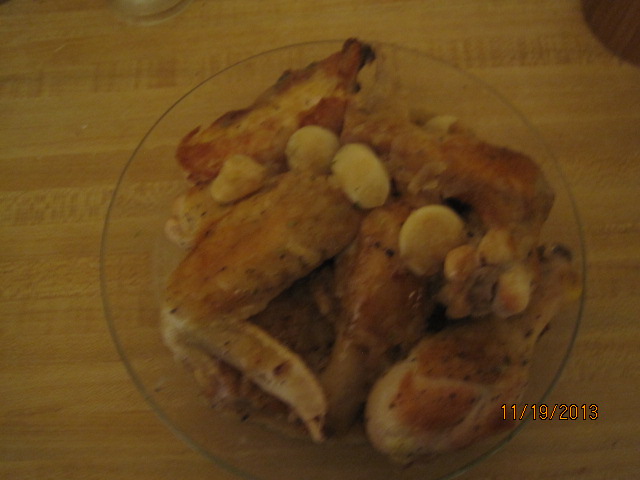
It certainly is an interesting combination if you have never had it before. The crispy chicken along with the crispy waffle and the maple syrup make for a tasty dish. I did not use a cut up fryer but only bone-in chicken thighs that I had on hand to make things a little bit easier. you could use whatever type of chicken pieces you prefer. For the Essence seasoning, the recipe makes about 2/3 cup, so you will have some leftover to use for other meals as a rub or seasoning. You could always just use whatever you like most on fried chicken instead and you can even buy your favorite waffle mix and use that if you did not want to make your own. I think it was certainly easy enough that it would warrant making again and it was different to try. Sean seemed to really enjoy it. This recipe made 4 servings, so it was just enough for the three of us with some leftover fried chicken that we can use for other meals.

That’s all I have for today. Check back next time for some more recipes. I still have a few Thanksgiving items to post, including another turkey recipe I am trying, so stay tuned. Until next time, enjoy the rest of your day and enjoy your meal!
001

 
6 Comments

Posted by on November 22, 2013 in Breakfast, Cooking, Dinner, Poultry


Tags: , , , , ,

A Simple French Dish – Chicken with Vinegar Sauce

Chicken seems to lend itself very well to easy weeknight meals no matter what pieces you happen to use. For many people, the easiest thing to do is take some boneless chicken breasts and make something from them, whether it is an easy casserole, a simple stir fry or just baking them in the oven with some potatoes or vegetables. While I like a boneless chicken breast now and then, I think you get so much more flavor out of bone-in pieces that it is worth having to wait a few extra minutes while they cook for what you get. The fact is that these pieces are often a lot cheaper than the boneless breasts anyway. Many times, I buy a whole chicken, cut it into pieces and use that for several meals. Depending on the price of the whole chicken, this can be even cheaper than buying the parts. In any case, this is one of those quick and easy weeknight recipes that can make good use of chicken parts or a cut-up chicken. I got this one from Cook’s Country for a simple yet elegant chicken with vinegar sauce.

Chicken with Vinegar Sauce

1 teaspoon cornstarch

1 cup chicken broth

1/2 cup cider vinegar

2 teaspoons honey

3 pounds bone-in chicken pieces (split breasts cut in half crosswise, drumsticks, and/or thighs), trimmed

Salt and pepper

2 teaspoons vegetable oil

1 shallot, minced

4 garlic cloves, lightly crushed and peeled

1 tablespoon butter

1 tablespoon chopped fresh tarragon

Adjust an oven rack to the upper-middle position and heat the oven to 450 degrees. Dissolve the cornstarch in 2 tablespoons of the chicken broth in a 2-cup liquid measuring cup. Whisk in the cider vinegar, honey and the remaining chicken broth; set the mixture aside.

Pat the chicken dry with paper towels and season with salt and pepper. Heat the vegetable oil in a large, oven-safe skillet over medium-high heat until it is just smoking. Cook the chicken, skin side down, until it is well browned, about 6 to 8 minutes. Transfer the chicken to a plate, skin side up.

Pour off all but 1 tablespoon of the fat accumulated in the skillet and return it to medium-high heat. Add the shallot and garlic and cook until they are fragrant, about 30 seconds. Whisk the broth mixture to re-distribute the cornstarch and add the mixture to the skillet, making sure to scrape up any browned bits on the bottom of the pan. bring the mixture to a boil and return the chicken to the skillet, skin side up, along with any accumulated juices on the plate. Move the skillet to the oven and cook until the chicken breasts register 160 degrees and the drumsticks/thighs register 175 degrees on an instant-read thermometer, about 10 to 15 minutes.

Transfer the chicken to a serving platter and tent it loosely with aluminum foil to allow the chicken to rest while preparing the sauce. Return the skillet to medium-high heat (be careful because the skillet handle will be hot from being in the oven), bring the sauce to a boil and cook until the sauce is slightly thickened, about 5 to 7 minutes. Off the heat, whisk in the butter, tarragon and any accumulated juices from the platter holding the chicken into the sauce. Season with salt and pepper to taste. Spoon the sauce over the chicken and serve.

The real key to this dish, in my opinion, is making sure you get good crispy skin on the chicken when you are browning it in the beginning of the recipe. If you can get that, you end up with a great looking and tasting meal. The sauce has some nice acidity to it from the vinegar but it also has great flavor from the broth and the chicken itself. The whole meal can be made in under 30 minutes, which is perfect for a weeknight dinner. I served it with some white rice and corn and it went very well. The sauce also added some great flavor to the rice.

That’s all I have for today. Check back next time for some more recipes. I still have a few Thanksgiving ideas to share, so keep checking for those. Until next time, enjoy the rest of your day and enjoy your meal!

001

 
Leave a comment

Posted by on November 21, 2013 in Cooking, Dinner, Poultry


Tags: , , ,

A Little Break From Thanksgiving For a Pork Chop Casserole

I am taking a little break today from all the holiday recipe ideas I have been making and posting to write about the entrée I made this past weekend for dinner. I had just received the latest issue of Cook’s Country magazine a few days ago and they always have such great recipe ideas in there that I end up using many of them in our daily cooking. This is true of the pork chop casserole I made on Sunday. Pork chops are not something I would normally consider as a great idea for a casserole dish, but this recipe made them perfectly and it tasted amazing.

Pork Chop Casserole

4 slices white sandwich bread, torn into 1-inch pieces

1/2 cup Parmesan cheese, grated

4 tablespoons butter

2 tablespoons chopped fresh sage

Salt and pepper

4 (8 to 10-ounce) bone-in blade-cut pork chops, about 1-inch thick, bones removed, trimmed

1 head green cabbage, cored and sliced 1/2 inch thick

4 carrots, peeled and cut into 1/2-inch pieces

1 onion, halved and sliced thin

4 garlic cloves, minced

1 tablespoon minced fresh thyme

2 tablespoons all-purpose flour

1/2 cup dry white wine

1/2 cup heavy cream

Adjust an oven rack to the middle position and heat the oven to 300 degrees. Process the white bread, Parmesan cheese, 2 tablespoons of butter, 1 tablespoon of sage, 1/2 teaspoon of salt and 1/2 teaspoon of pepper in a food processor until coarsely ground, about 8 pulses. Set the mixture aside. Pat the pork chops dry with paper towels and season with salt and pepper. Melt the remaining 2 tablespoons of butter in a Dutch oven over medium-high heat. Add the pork chops and cook until they are well browned, about 4 minutes per side. Transfer the chops to a cutting board, halve them crosswise, and place them in a 13 by 9-inch baking dish.

Add the cabbage, carrots, onion, 1/2 teaspoon of salt and 1/2 teaspoon of pepper to the now-empty Dutch oven and cook, covered, until the cabbage is wilted, about 7 to 10 minutes. Remove the lid and continue to cook the vegetables until the onion is browned and the moisture from the pan has evaporated, about 5 minutes.

Add the garlic, thyme and the remaining 1 tablespoon of sage and cook until it is fragrant, about 30 seconds. Add the flour and cook for 1 minute. Add the wine and the cream, bring the mixture to a boil, and cook until it is thickened, about 1 minute. Pour the cabbage mixture over the pork chops and cover the baking dish with aluminum foil. Bake until the pork chops are tender, about 1 hour.

Remove the foil, increase the oven temperature to 425 degrees, and continue to cook the casserole until the top is browned, about 15 minutes. Top the casserole with the bread crumb mixture and continue to bake the casserole until it is golden brown, about 15 minutes. Let the casserole cool for 15 minutes before serving.

I know it may seem silly to use blade pork chops with the bone and then remove the bone, but there is a reason for it. The blade chops generally have more fat than the other chops you see in the stores, and these most often have the bone in them. More fat not only means more flavorful meat in this case but it is also less likely to dry out while cooking in this method. I loved the flavor the casserole had with the mix of the pork and the cabbage and the bread crumb topping added just the right amount of crunch without there being too much of it. Everyone seemed to really enjoy it and I’ll be making this one again. I served this with the winter squash bowls and some roasted balsamic potatoes to round out the meal.

That’s all I have for today. Check back next time for some more recipes. I have a couple of breads I have tried recently that might be good for Thanksgiving coming up – some french bread and some focaccia rolls. Until next time, enjoy the rest of your day and enjoy your meal!

004

 
Leave a comment

Posted by on November 20, 2013 in Cooking, Dinner, One Pot Meals, Pork


Tags: , , , , , ,

Essential Thanksgiving – Interactive Feature – NYTimes.com

Essential Thanksgiving – Interactive Feature – NYTimes.com.

The New York Times lays everything out for you perfectly in this article. They cover everything you need to know and prepare for your Thanksgiving meal to make things as easy as possible for you. Check it out!

 
1 Comment

Posted by on November 20, 2013 in Cooking, Cooking Websites, Dinner, Holidays, Turkey


Tags: , , , ,

How About An Elegant Thanksgiving Side? Winter Squash Bowls

While I did not make this side dish with the turkey I made recently, it is one that would go well with your Thanksgiving meal and look really nice on the table. Any type of winter squash would work well for Thanksgiving or any Fall or winter meal, and doing one like this can make a Sunday dinner look nice or your holiday table. I got this recipe from Bon Appetit and you really have your choice of what type of winter squash you want to use, so use what you like best and what is most available in your area.

Winter Squash Bowl

1 medium butternut squash ( about 1 1/2 pounds)

5 small winter squash (about 1 pound each; such as acorn squash, carnival, delicata or sugar pumpkins), divided

4 1/2 teaspoons olive oil, divided

3 teaspoons pure maple syrup, divided

Kosher salt and freshly ground black pepper

1 tablespoon butter, room temperature

1 teaspoon fresh thyme leaves

Preheat the oven to 400 degrees. Line 2 rimmed baking sheets with parchment paper. Cut the butternut squash in half crosswise. Set the top half of the butternut squash aside. Remove the seeds and strings from the bottom half of the butternut squash and discard them. Place the bottom half of the butternut squash on 1 baking sheet. Remove the caps from 3 of the small squash by cutting a circle 1 inch around the stems with a small serrated knife (just like you were carving a pumpkin). Slice off and discard the strings from the bottom sides of the caps. Scoop out the seeds and strings from the centers of the squash and discard.

Cut a thin slice off the bottom of the 3 hollowed-out small squash so the squash will sit evenly on a flat surface; place (with the caps on) the squash on a baking sheet along with the bottom of the butternut squash. Drizzle the insides of the squash with 1/4 teaspoon of olive oil and 1/4 teaspoon of maple syrup. Season the cavities with salt and pepper. Bake the squash until a paring knife inserted into the squash meets no resistance, about 1 hour.

Meanwhile, remove the stems from the remaining 2 small squash and cut the squash in half lengthwise. Remove the seeds and strings from the small squash and the top half of the butternut squash and discard. Peel and chop the squash into 1/4-inch pieces and place them in a large bowl. Add the remaining 4 1/4 teaspoons of olive oil and toss to coat them well. Season the squash pieces with salt and pepper. Spread the squash pieces in a single layer on the remaining baking sheet and bake, stirring once, until the squash is tender, about 30 minutes. Transfer the baked squash to a large bowl and toss it with the remaining 2 3/4 teaspoons of maple syrup, the butter and the thyme leaves. Divide the baked squash among the hollowed-out butternut and small squash and serve warm or at room temperature.

I did change this recipe up just slightly. Since I was making this for less people, I did not need to use all this squash. What I actually did since I had a very large butternut squash is cut it into 3 sections, hollow out part of it, and used 2 sections of the butternut squash and one acorn squash to fill with the remaining squash. I have to say the squash I had was pretty solid and did have a lot of seeds, so I had to do some hollowing out on my own, which took a little work, but it was worth it. The squash was wonderfully roasted and tender and had great flavor from the maple syrup. It also looked very nice in the squash bowls itself. I think you could easily do this with just one squash of any size if you wanted something smaller and elegant for a weeknight meal.

That’s all I have for today. Check back next time for some more recipes. I have a pork chop casserole recipe I just tried, some homemade french bread, a great turkey pot pie for your turkey leftovers, another turkey recipe, chicken and waffles and much more to come so stay tuned. Until next time, enjoy the rest of your day and enjoy your meal!

003

 
1 Comment

Posted by on November 19, 2013 in Cooking, Dinner, Holidays, Vegetables, Vegetarian


Tags: , , , , , ,

Another Great Holiday Appetizer – Meatball Sliders

There are some things you may not think of as a great holiday appetizer unless you just happen to have everything fall into place as far as ingredients and what you have on hand. This was one of those recipes for me. I had some meatballs on hand already that I had made and frozen, so it really just became a matter of putting them together with the rolls and some cheese and we were all set. Now, if you wanted to make this recipe ahead of time and use it for a holiday appetizer, it is certainly easy to do. This is the meatball recipe that I use most often, but you could easily use any meatball recipe you prefer or even use some frozen meatballs you may have on hand to make things even easier.

Meatball Sliders

2 stalks celery, chopped

1 medium carrot, roughly chopped

1 medium onion, roughly chopped

6 cloves garlic

1 cup fresh parsley leaves

1 pound ground beef

1 pound ground pork

2 large eggs

1 cup Italian-style breadcrumbs

1 cup plus 3 tablespoons grated Parmesan cheese

2 28-ounce cans tomato puree

2 large sprigs basil

1 teaspoon dried oregano

1 cup shredded mozzarella cheese

Slider rolls

Brush a baking sheet with olive oil. Pulse the celery, carrot, onion, garlic and parsley in a food processor to make a paste. Transfer half of the vegetable paste to a bowl; add the ground beef, ground pork, eggs, breadcrumbs, 1 cup of the Parmesan cheese and 1 teaspoon of salt and mix with your hands until it is just combined. Form the mixture into about 24 two-inch meatballs; transfer the meatballs to the prepared baking sheet. Bake the meatballs until they are firm but not cooked all the way through, about 10 minutes.

To make the sauce, heat 3 tablespoons of the olive in a large pot over medium-high heat. Add the remaining vegetable paste and cook, stirring occasionally, until it looks dry, about 5 minutes. Stir in the tomato puree; rinse each can with 1 cup of water and add it to the pot. Stir in the basil, oregano and 1 1/2 teaspoons of salt. Bring the sauce to a simmer, then add the meatballs and simmer until the sauce thickens and the meatballs are cooked through, about 15 to 20 minutes. Remove the basil.

Place 1 or 2 meatballs and sauce inside each of the slider rolls and top each with mozzarella cheese. Serve.

It is a very simple recipe to put together and the sliders were devoured when I made them in no time at all. You could easily do the same thing with sausage and peppers if you had some on hand or wanted to make some ahead of time and then simply re-heat the sausage and peppers and put them into slider rolls. For me, it was just a matter of warming he meatballs and sauce on the stove top for about 5 to 10 minutes just to heat them through and then assemble the sliders.

That’s all I have for today. Keep checking back as there is plenty more along the way leading up to Thanksgiving. I have lots of side dishes to share, some desserts, breads and even things to do with leftovers. Keep checking back to see what is next. Until then, enjoy the rest of your day and enjoy your meal!

003


Leave a comment

Posted by on November 15, 2013 in Appetizers, Beef, Cooking, Dinner, Holidays, Sandwiches


Tags: , , ,

What’s a Turkey Without Stuffing? Apple, Sage and Sausage Stuffing

One of my favorite parts of the Thanksgiving meal has always been the stuffing. Even the famous Stove Stop stuffing has its place, but if you have a little bit of time and want something that tastes a whole lot better, then take the effort to make the stuffing yourself. it is not as tough as you think it may be to make one and you can even do it a day ahead of time and just warm it up in the oven to save yourself some time. There are a lot of recipes out there for stuffing and have a few favorites of my own, but I tried a new one this weekend when I made roast turkey for Michelle’s birthday. Like the turkey, this one also came from Saveur Magazine and is for a very simple apple, sage and sausage stuffing.

Apple, Sage and Sausage Stuffing

8 tablespoons butter

3 ribs celery, chopped

1 onion, chopped

4 pork sausages, casings removed

3 apples, peeled and chopped

1 loaf white bread, crust cut off, cut into 1/2-inch cubes and toasted (about 8 cups)

2 tablespoons finely chopped fresh sage

2 cups chicken stock

Kosher salt and freshly ground black pepper, to taste

Heat the oven to 375 degrees. Melt the butter in a large skillet over medium-high heat. Add the celery and the onion, Cook until the vegetables are soft, about 15 minutes. Add the sausage and cook, using a wooden spoon to break the sausage into small pieces, until browned, about 5 minutes. Add the apples and continue cooking until the apples are soft, about 5 to 7 minutes more. Stir in the bread crumbs and the sage; add the chicken stock and season with salt and pepper to taste.

Stuff the stuffing into the turkey cavity, if you wish and roast the turkey according to plans or instructions. Take the remaining stuffing and place it in a baking dish and bake until it is golden on top, about 20 to 25 minutes.

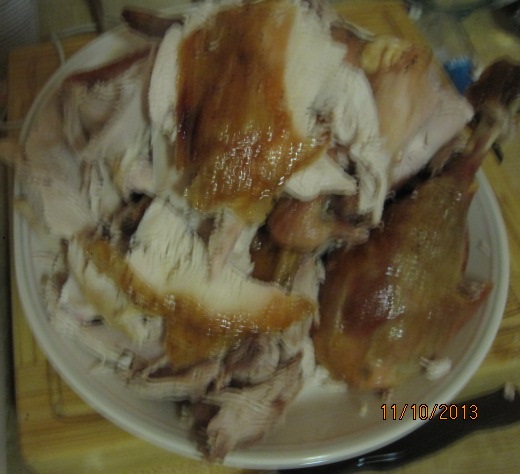
I personally did not put any stuffing in the turkey. I have never been a big fan of stuffing that way and it makes the turkey have to cook even longer and the turkey does not always roast evenly with the stuffing inside it. If you are going to stuff the bird, you want to make sure that any stuffing you use is cooked already. If you want to make this stuffing ahead of time, instead of putting it right into the oven after mixing everything in, place the stuffing in a baking dish, cover it with foil and refrigerate it until the next day. Then, when you take the turkey out to rest, you can place it in a 375 degree oven for 30 minutes to cook and heat up. You’ll want to take the aluminum foil off the dish so the bread crumbs crisp up nicely. You may also need to add a little bit of moisture back into the stuffing because the bread will have absorbed a lot of it. I did not add any in and the stuffing tasted just fine, but it depends on how you like it. I loved the mix of the apples and sausage with the bread and the sage added just the right touch to the dish. I think it would be really good if you used a challah bread with this stuffing as well.

That’s all I have for today. Keep checking back for some more recipes that will be great for Thanksgiving. There’s lots more to come. Until next time, enjoy the rest of your day and enjoy your meal!
010

 
1 Comment

Posted by on November 12, 2013 in Cooking, Dinner, Holidays, Sausage, Side Dishes, Turkey


Tags: , , , ,

The Perfect Roast Turkey? It Seems Pretty Darn Close

It seems like there are dozens of different ways to make your Thanksgiving turkey and hundreds of different recipes out there to suit whatever need, ingredients or things you may want to try when it comes to the turkey. For me, roasting a turkey doesn’t get much better. Since I am not hosting Thanksgiving this year, Michelle decided she would like to have a turkey dinner to help celebrate her birthday this past weekend. Now I didn’t really need a recipe to make the turkey, but I came across this method from Saveur Magazine that professed to make the perfect roast turkey, so I figured I would give it a try to see how it worked out.

Perfect Roast Turkey and Gravy

1 13-14 pound fresh turkey

2 tablespoons kosher salt

1 teaspoon freshly ground black pepper

1 1/2 cups homemade chicken or turkey broth

3/4 cup dry white wine or dry vermouth

2 tablespoons brandy

4 tablespoons fat from the roasting liquid or butter

1/3 cup all-purpose flour

4 cups warm turkey or chicken broth

Remove the giblets from the turkey and refrigerate them for a later use. Pat the turkey dry with paper towels. Sprinkle the kosher salt and black pepper liberally all over the turkey, spreading a little in the turkey cavity and being sure to season the back, breasts and thighs. Arrange the turkey on a wire rack over a rimmed baking sheet and refrigerate, uncovered (this will help to dry out the skin, giving you a crisper skin during the roasting) for one to two days.

Remove the turkey from the refrigerator about two hours before roasting to take the chill off the bird. This will help it to cook more evenly. Heat the oven to 450 degrees. Tuck the turkey wings behind the neck and tie the tips of the drumsticks together with kitchen twine. Arrange the turkey breast side up on a rack set in a sturdy roasting pan. Pour 1 1/2 cups of the turkey or chicken broth into the bottom of the pan and slide the turkey into the oven, immediately lowering the heat to 350 degrees. Let the turkey roast for 2 1/2 to 3 hours total, rotating the pan after about 1 1/4 hours. Meanwhile, combine the remaining broth with the giblets in a saucepan over medium heat. Simmer gently, partially covered, until the giblets are tender, about 45 minutes. Remove the giblets, saving them to add to the gravy later, and keep the broth warm.

Baste the turkey by spooning pan drippings over the breasts every 45 minutes. If you notice the breasts or drumsticks getting too dark, cover them loosely with aluminum foil during the last 30 to 45 minutes of roasting. The turkey should cook at a rate of about 13 minutes per pound. To check the doneness, pierce the meaty part of thigh with a sharp knife and check that the juices run mostly clear with only a trace of pink. Don’t wait for them to become perfectly clear; this may br a sign that the turkey is already overdone. To double-check yourself, insert an instant-read thermometer into the thigh, being careful not to hit the bone; it should read 170 degrees.

When the turkey is done, grab both sides of the roasting rack with oven mitts to lift and tilt the turkey and let the juices pour from the cavity into the pan. Set the turkey aside, tenting it very loosely with foil, to rest for at least 30 minutes while you make the gravy. Pour all the liquid from the roasting pan into a heatproof bowl or 1-quart measuring cup and set it aside. Set the roasting pan over 2 burners at medium-high heat and add the white wine or vermouth and the brandy. Bring to a boil, scraping with a wooden spoon to dissolve any cooked-on bits and return the reserved liquid to the roasting pan. Boil, stirring often, until the liquid is reduced to nearly half, about 8 minutes. Turn off the heat and set aside.

Once the liquid from the roasting pan has settled, spoon off and transfer the surface fat to a medium saucepan to make a roux for your gravy. If you can get 4 tablespoons of fat from the surface, use that; if not, you can make up the difference by using some butter. Heat the fat over medium-low heat and whisk in 1/3 cup of flour until it is smooth. Cook for about 4 minutes, until the roux is a light amber color, and then gradually whisk in the reserved pan drippings. Bring the mixture to a simmer and slowly whisk in 4 cups of the warmed broth. Let the gravy simmer and thicken, whisking occasionally, for about 15 minutes (or longer if you want a thicker gravy). For a hearty giblet gravy, finely chop the neck meat along with the gizzard and the heart and stir it into the finished gravy. Season the gravy with salt and pepper to taste and keep the gravy warm while you carve the turkey.

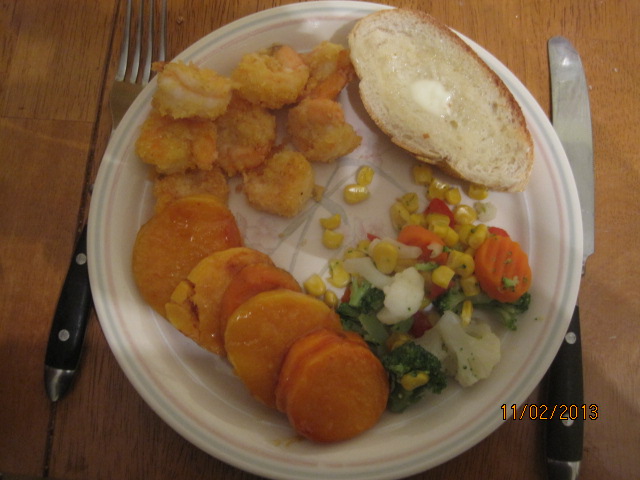
I don’t know if this is the perfect roast turkey, but I have to say if it isn’t it’s pretty darn close. I had never salted the turkey like this before, but it did seem to help the bird when it came to retaining moisture and juice and it wasn’t too salty, though we did find that you don’t really need to add much salt, if any at all, to the gravy because the pan drippings had plenty. The bird was perfectly browned and moist and the gravy was wonderful. Saveur does provide a method for making your own turkey broth ahead of time using turkey parts that you can buy, but I didn’t do this and just used chicken stock that I had instead and I think it turned out fine. I think you could certainly substitute store-bought chicken or turkey broth to save you some time if you don’t want to make your own turkey broth.

That’s all I have for today. I have lots of other recipes that are perfect for Thanksgiving as I made a lot of side dishes to go along with this turkey, so check back all week for some great ideas on ways to make turnip casserole, Brussels sprouts, maple glazed carrots, sausage, apple and sage stuffing, creamed pearl onions, some great appetizers like broccoli dip in a bowl and meatball sliders and a lemon layer cake I made for dessert. Check back and see what comes up next. Until then, enjoy the rest of your day and enjoy your meal!
011


5 Comments

Posted by on November 11, 2013 in Cooking, Dinner, Gravy, Holidays, Poultry, Turkey


Tags: , , , , , , , , , ,

Dinner in a Flash – Quicker Than You Can Say Cornmeal Batter Shrimp

For many people, the only real association they have with seafood is shrimp. We eat a lot of different seafood in our home, but shrimp seems to be a constant favor among my family, as it is with many other families. The great thing about shrimp is that it is really easy to make and very versatile. You can do all kinds of things with it and cook it in many different ways. If you can get fresh shrimp for a good price in your local area, then go for it. For the majority of people around the country, most of the shrimp available in supermarkets or other stores is farm-raised and frozen. You can even get it often in resealable bags so you can take out just as many as you need to cook for your meal, thaw them in the refrigerator overnight or run them under cold water for an hour or less and you can start cooking. Just a few weeks ago, the New York Times Magazine ran an article about different ways to cook shrimp and gave some different recipes, which is where I picked up this recipe for cornmeal batter shrimp.

Cornmeal Batter Shrimp

Vegetable oil

1 pound shrimp, peeled and deveined

1 cup milk

1 egg

1 cup cornmeal

1/2 cup all-purpose flour

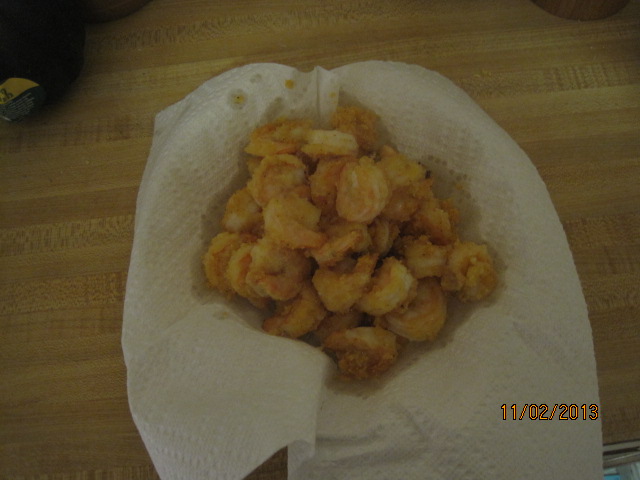
Heat about 2 inches of vegetable oil in a cast iron skillet or Dutch oven until the temperature of the oil registers 350 degrees. Slice the shrimp lengthwise while the oil is heating. Combine the milk and the egg in a separate shallow dish and beat the egg until blended with the milk. In another shallow dish, combine the cornmeal and flour and mix gently until just combined. Dip the shrimp in the liquid mixture, shaking off any excess. Dredge the shrimp in the cornmeal mixture, again shaking off any excess. Fry the shrimp in small batches in the hot oil for less than 5 minutes until golden brown. Drain the shrimp on a paper towel lined dish and cover the dish while you repeat the process with the remaining shrimp. Serve.

The whole meal can be done in about 10 or 15 minutes, including preparation. Make sure not to overcook the shrimp as it will very quickly get very rubbery and chewy. The shrimp will turn out nice and crisp and the cornmeal not only helps to give it a great crust, but really good flavor as well. You can serve this alongside some tartar sauce or cocktail sauce if you like. We had this as an entrée one night with some baked ginger sweet potatoes and some mixed vegetables, but you could also make this as a nice appetizer for any party, holiday or weekend and it would make a great snack while watching some football.

That’s all I have for today. Check back next time for some more recipes. There’s always lots more to come. Until then, enjoy the rest of your day and enjoy your meal!
003 001

 
Leave a comment

Posted by on November 7, 2013 in Appetizers, Cooking, Dinner, Seafood


Tags: , , , ,

 
National Day Calendar

Fun, unusual and forgotten designations on our calendar.

Jennifer Probst

a little bit naughty a little bit nice

Laissez Faire

Letting Life Lead

simple cooking recipes

a blog to share with you the best